
Every week somebody in a group posts the photo. The mailer that got folded like a taco. The toploader that arrived empty because the card slid out in transit. The $200 card sent loose in a plain white envelope, which is not packing, it is gambling with someone else's money.
None of that is bad luck. It is bad packing, and bad packing is a choice. There are exactly two ways a card should leave your hands, and the right one depends on what the card is worth. Here is the whole standard, both routes, the way we do it for every card that leaves our shop.
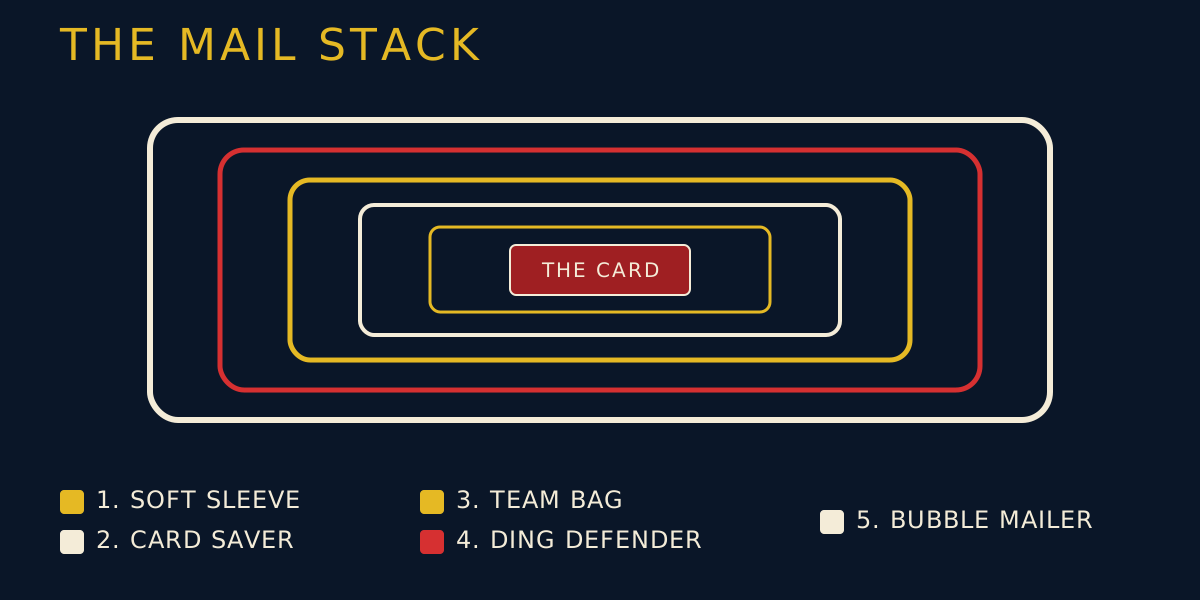
The layers every card gets
Penny sleeve first. Every card, every time, no exceptions. The sleeve does not protect against impact, it protects the surface from everything else in the stack. Slide the card in, do not force it, and never tape it shut.
Then a holder. A toploader or a semi-rigid, and the route decides which. Going in a bubble mailer? Toploader. Going PWE? Semi-rigid, and we will explain why in a second.
Then a team bag. The resealable sleeve that seals the holder shut. Now the card cannot slide out, dust cannot get in, and the adhesive strip touches the bag, never the holder, never the card.
Those three layers are non-negotiable on both routes. What happens next is where they split.
Route one: PWE
The plain white envelope. One or two stamps, no tracking, no padding. This is the budget route for cards where the postage cannot cost more than the card: commons, base, the $3 to maybe $15 tier, between people who accept the deal.
The PWE rules:
Semi-rigid, not a toploader. A Card Saver flexes through the USPS rollers and keeps the envelope thin enough to stay machinable. A toploader in a PWE is rigid enough to jam, thick enough to draw a surcharge, and heavy enough to tear the paper at the corner. Semi-rigid is the whole reason this route works.
Brace it. Team-bagged semi-rigid, seated in the middle of the envelope so it rides between the rollers, not against them. If it can shift, it will find the one place it should not be.
Know what you signed up for. No tracking means no proof. We use PWE for low-dollar cards and we say so in the listing, because pretending a stamp and a prayer is real postage handling is how group drama starts.
Route two: BMWT
Bubble mailer with tracking. This is the default for anything that matters, and it is the only way singles leave our shop.
The stack, in order: penny sleeve, toploader, team bag, Ding Defender, bubble mailer. The Ding Defender is the layer most people skip: a rigid corrugated shield that wraps the team-bagged holder so a corner strike hits plastic, not cardboard, not card. It is the difference between a mailer that got kicked across a sorting facility and a buyer who never knows it happened.
Card rides in the middle of a number 000 four-by-eight mailer, tracking number goes to the buyer the moment it prints. Done.
The ceiling: at five hundred dollars, the bubble mailer retires. Boxed, signature required, fully insured. A mailer can dignify a $60 card. It cannot dignify a $900 one.
The five packing sins
Tape on the sleeve. The buyer now has to perform surgery to reach their card, and one slip puts adhesive or a blade on the surface. Painter's tape exists. It holds everything and peels off clean.
The naked PWE. A raw card in an envelope with no holder is going through rollers built to bend paper. If you choose the PWE route, choose the whole route: sleeve, semi-rigid, team bag, braced.
The toploader PWE. The opposite sin. Rigid holder, paper envelope, machine surcharge, torn corner. Toploaders ride in bubble mailers, semi-rigids ride in envelopes, and mixing them up gets cards hurt.
The rattle. Any package where you can hear the card move when you shake it gently. It is not packed, it is loose cargo. Team bag it, Ding Defend it, seat it tight.
Packing tape everywhere. Wrapping the team bag, the holder, sometimes the card itself in packing tape. Your buyer should never need scissors to get within one layer of their card.
Weigh it, do not guess it
A small digital scale pays for itself in about two weeks of selling. Guessed postage comes back, and returned mail is the single most dangerous trip a card can take because it doubles the handling. Weigh the packed mailer, print the label, done.
Why we are this way about it
Because packing is the last thing you do for a buyer and the first thing they see. Every card we mail out gets the BMWT stack or better, and when it arrives looking like somebody cared, that is the whole brand in one envelope. Steal the standard. Your buyers will notice, and their group posts about you will be the good kind.